

The Feel Like Beauty edit · Ingredient guide
Hyaluronic acid, explained
What it is, what it really does for your skin, how to use it so it works, and the products we'd reach for first.
~50%
of your body's hyaluronic acid is found in your skin.1
<1 day
is how long HA lasts in skin before your body breaks it down and renews it.1
~80%
of visible facial skin aging is linked to UV. HA hydrates; daily SPF protects.1
70%
Below roughly this humidity, seal HA with moisturizer so it doesn't draw water from deeper skin.2
Hyaluronic acid is one of skincare's most popular ingredients, and one of its most misunderstood. Used well, it's a simple way to make skin feel softer, smoother and more comfortable every day.
What is hyaluronic acid?
Despite the name, hyaluronic acid (HA) isn't an exfoliating acid. It's a sugar-based molecule your skin makes naturally, with a rare ability to bind and hold on to water. About half of all the HA in your body is in your skin, where it helps keep it moist, cushioned and supple.1
Your skin is always making and breaking down HA, renewing it in less than a day. With age, HA in the outer layer of skin (the epidermis) drops sharply, and sun exposure speeds up its breakdown. That's one reason skin can feel drier and look less plump over time.1
On an ingredient list you may see it as hyaluronic acid, sodium hyaluronate (its salt form, which is smaller and very common in serums) or hydrolyzed hyaluronic acid.
What it does for your skin
- Hydrates by drawing water into the upper layers of skin.
- Plumps the look of skin and softens fine, dry-looking lines.
- Smooths rough, tight-feeling texture.
- Comforts skin that feels dry after cleansing, exfoliating or retinol.
- Suits every skin type, oily skin included, because it's light and oil-free.
That distinction matters. Hyaluronic acid applied to skin works mainly at and near the surface. It won't rebuild what has been lost in deeper layers, which is why we describe its benefits as hydration and a smoother, plumper look.
How it works
HA is a humectant: it pulls water toward itself. Where that water comes from is the key to using it well.
Seals the surface so the water HA holds can't evaporate.
Larger HA molecules stay here, holding water in a light, flexible film.
Smaller HA can reach the upper layers. This is also where your own HA falls most with age.1
Holds much of your skin's own HA, which gives skin its bounce. Topical HA doesn't replace it.
On damp skin, HA has water close by to hold on to. In dry or heated air, it can draw water up from deeper skin instead, which may leave you feeling tighter if nothing stops that water evaporating.2 A moisturizer on top seals it in. That one habit is the difference between HA that works and HA that disappoints.
Myths vs facts
"It's an acid, so it exfoliates."
FactHA is a hydrator, not an exfoliant. It doesn't loosen dead skin cells the way glycolic or salicylic acid does.
"More layers means more hydration."
FactOne good HA serum plus a moisturizer is enough. Extra humectant layers add little and give more chances for irritation.2
"HA works fine on its own."
FactIt works best with water nearby and a moisturizer on top, especially in dry air.2
"Oily skin doesn't need it."
FactSkin can be oily and dehydrated at the same time. HA is light and oil-free, so it layers easily under a gel moisturizer.
Choose by skin type
- Dry skin: serum on damp skin, then a richer cream at night. Add a hydrating mask once or twice a week.
- Oily or breakout-prone skin: keep it light. Our Hyaluronic Acid Facial Serum also contains salicylic acid to help keep pores clear.
- Sensitive skin: start with one HA product, patch test, and keep your routine short. Check the full ingredient list, as some HA formulas also contain exfoliating acids or retinol.
- Mature or sun-exposed skin: pair HA with retinol at night, like our Retinol, Firming & Hyaluronic Acid Night Moisturiser, and wear SPF every day.
What to pair it with
| Ingredient | With HA? | How to use them together |
|---|---|---|
| Vitamin C | Yes | Morning. Apply the thinnest product first, then moisturizer and SPF. |
| Niacinamide | Yes | Morning or night, in either order. |
| Retinol | Yes | Night. HA helps offset the dryness retinol can cause. |
| AHAs and BHAs | Yes | Use HA after exfoliating to comfort skin. Build up exfoliation slowly. |
| Ceramides and rich creams | Yes | They seal HA in. Use them as your last layer at night. |
| Sunscreen | Always | Every morning, as your final step. |
Our picks
Build your hyaluronic acid routine
Start with a serum and a moisturizer, then add the extras your skin enjoys. Prices and stock update automatically.
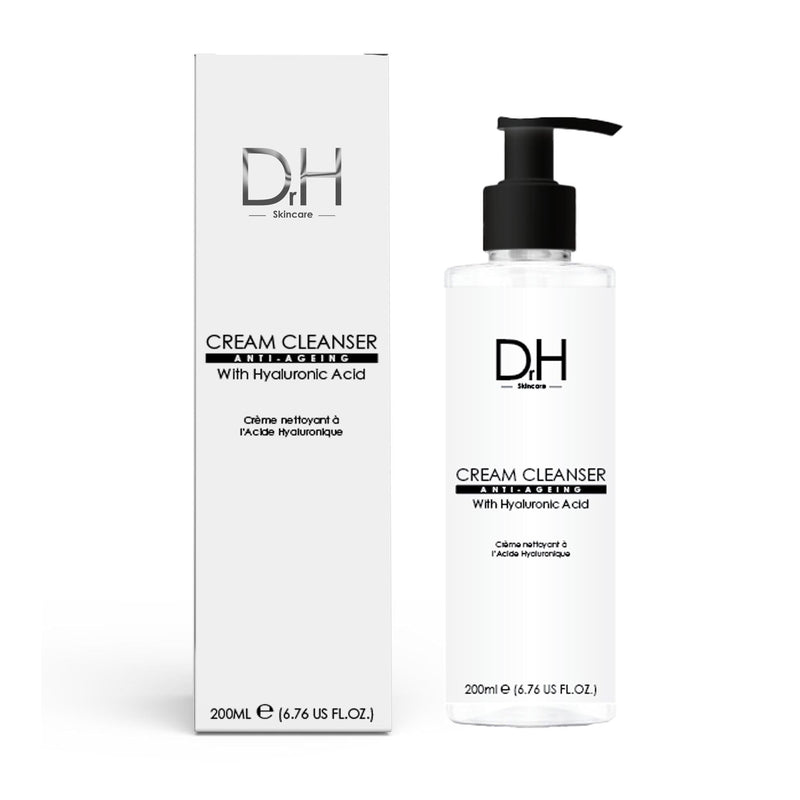
Step 1 · Cleanse
Hyaluronic Acid Cream Cleanser 200ml
Best for: Normal to dry skin
A creamy cleanse with glycerin and shea butter, plus a little salicylic and glycolic acid. Skin feels clean, never stripped.
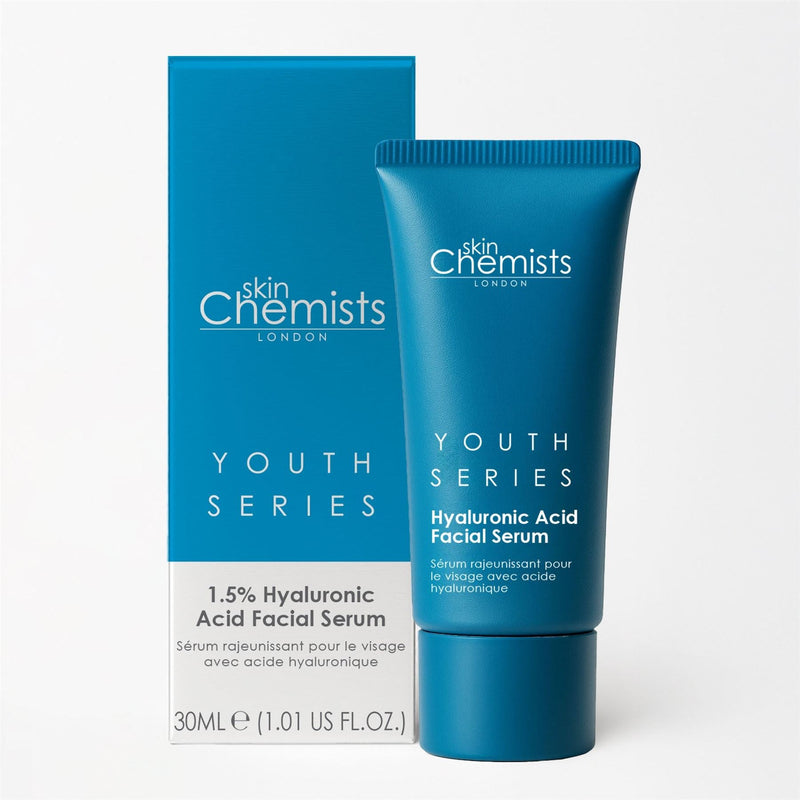
Step 2 · AM + PM
1.5% Hyaluronic Acid Facial Serum 30ml
Best for: All skin types
Our everyday hydrating serum with 1.5% hyaluronic acid. Press a few drops into damp skin, morning and night.
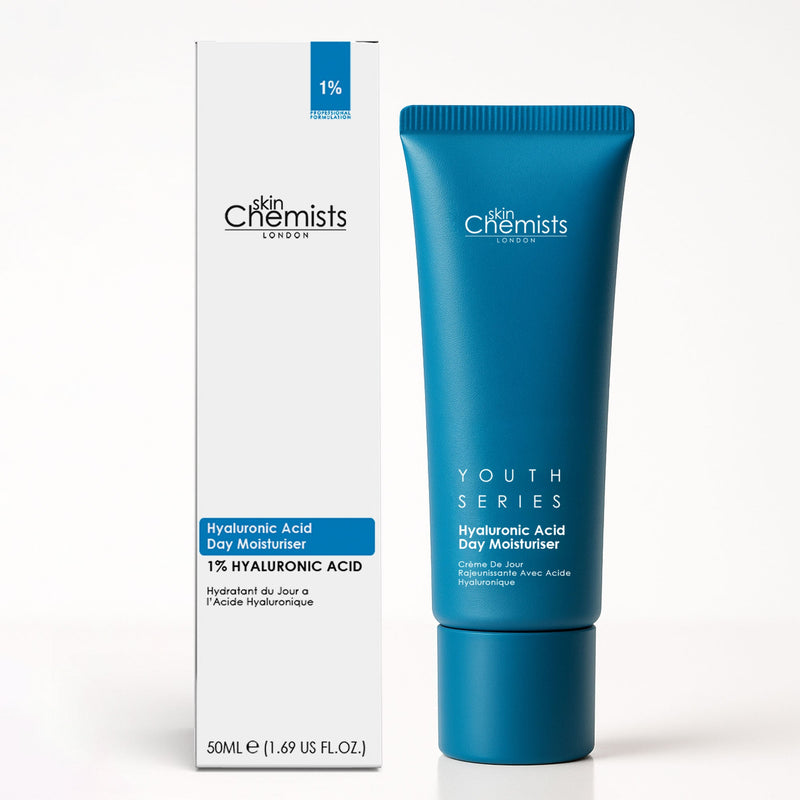
Step 3 · Morning
Hyaluronic Acid Day Moisturiser 50ml
Best for: All skin types
A lightweight day cream that absorbs quickly and seals your serum in. Follow with SPF.
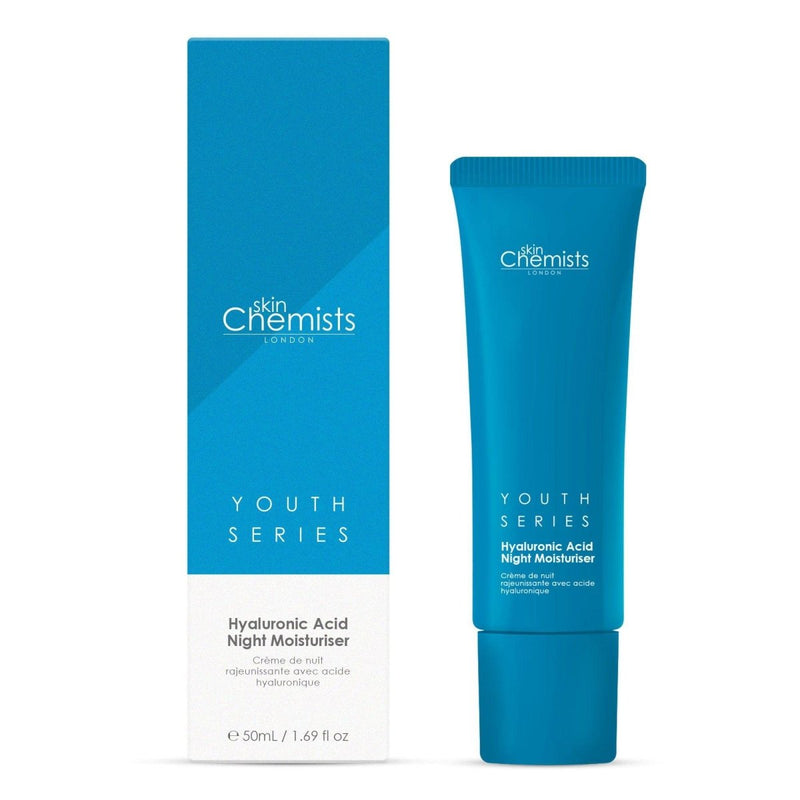
Step 3 · Evening
1% Hyaluronic Acid Night Moisturiser 50ml
Best for: Dry or tired-looking skin
A nourishing overnight cream with 1% hyaluronic acid and plant-based actives, for softer, smoother-feeling skin by morning.
Extra · AM + PM
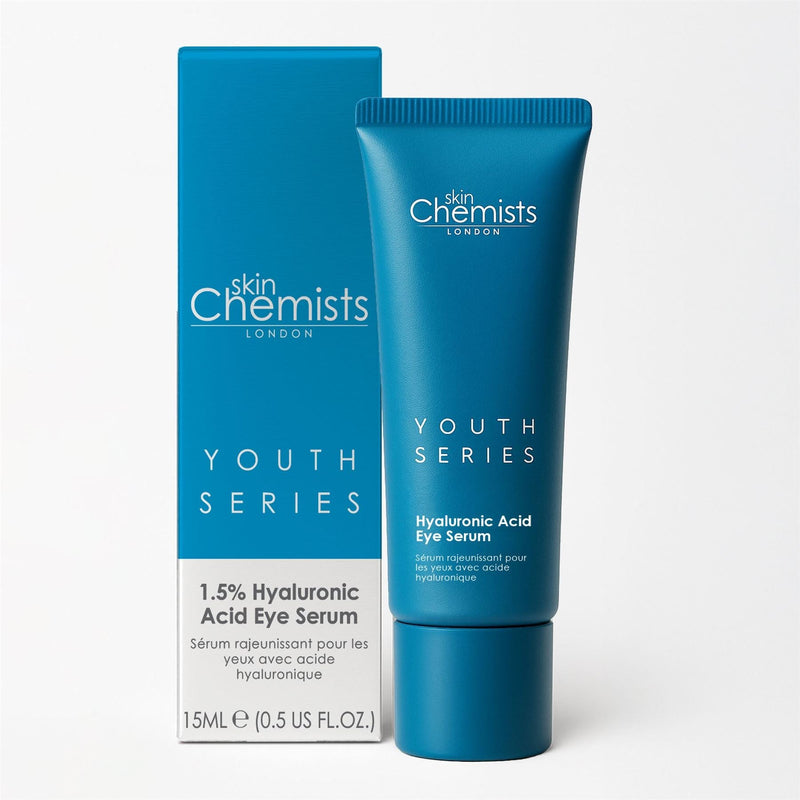
1.5% Hyaluronic Acid Eye Serum 15ml
Best for: Dry, tired-looking under-eyes
A 1.5% hyaluronic acid serum made for the delicate eye area. Pat on gently with your ring finger.
Extra · Once or twice a week
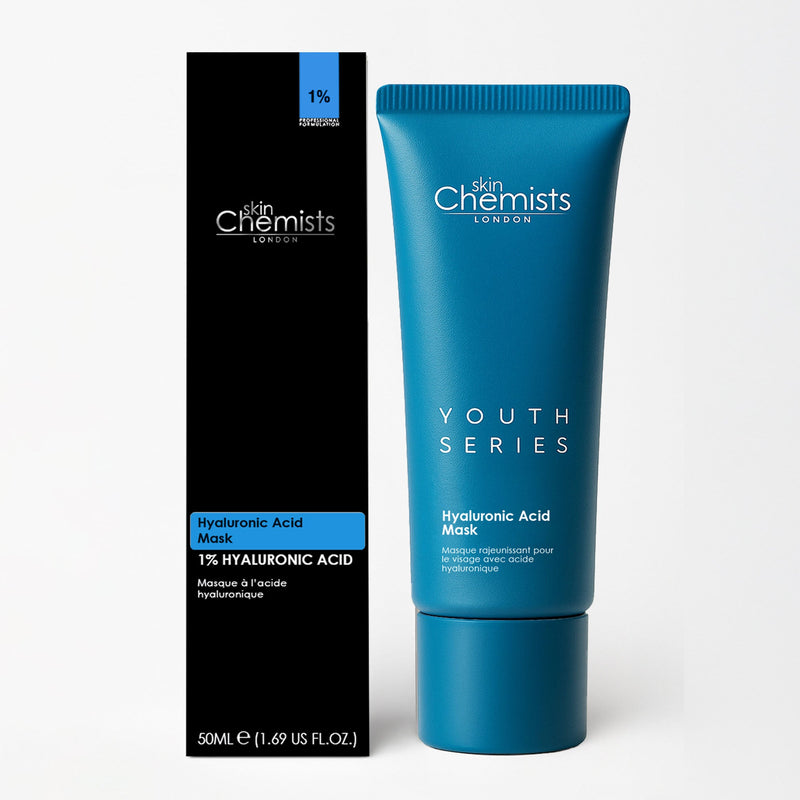
Hyaluronic Acid Mask 50ml
Best for: Dehydrated skin
A creamy mask for a deeper drink of moisture when your skin feels tired or thirsty.
Not sure where to start?
Youth Series 1.5% Hyaluronic Acid Anti-Ageing Starter Kit
Our Youth Series hyaluronic acid essentials in one set. An easy way to try HA before building a full routine.
How to use it
Three rules, two routines
You don't need ten steps. Follow these three habits and HA will do its job.
01
Damp, not dry
Apply to skin that's still slightly wet from cleansing or a facial mist.
02
A few drops is plenty
Two or three drops of serum cover the face and neck. More won't hydrate more.
03
Always seal it
Follow with moisturizer straight away, and SPF in the morning.
Morning
Hydrate + protect
- Cleanse gently, or rinse with lukewarm water.
- Press HA serum into damp skin.
- Pat eye serum around the eye area (optional).
- Apply day moisturizer to seal it in.
- Finish with broad-spectrum SPF 30 or higher.
Evening
Cleanse + replenish
- Cleanse to remove SPF and makeup.
- Press HA serum into damp skin.
- Apply any treatment, like retinol. Introduce it slowly.
- Finish with night moisturizer.
Once or twice a week, add a hydrating mask when skin feels thirsty.
Quick answers
Hyaluronic acid FAQ
Can I use hyaluronic acid every day?
Yes. HA is gentle enough for morning and evening use. Follow the directions on each product, especially if the formula also contains exfoliating acids or retinol.
Why does my skin feel tight after using HA?
Usually because it went onto dry skin in dry air, or wasn't sealed. Apply it to damp skin and follow straight away with moisturizer.
Serum or moisturizer first?
Serum first, then moisturizer. In the morning, sunscreen is always the last step.
Is hyaluronic acid suitable for sensitive skin?
HA itself is generally well tolerated. Patch test new products and check the full ingredient list, since some formulas include other active ingredients.
Can I use it with retinol or vitamin C?
Yes, both are common partners. Use vitamin C in the morning and retinol at night, with HA in either routine.
What's the difference between hyaluronic acid and sodium hyaluronate?
Sodium hyaluronate is the salt form of HA. It's smaller and very common in serums. Both do the same job: attract and hold water.
Can I use hyaluronic acid during pregnancy?
HA itself is widely used, but some HA products also contain retinol, which is generally avoided during pregnancy. Check the full ingredient list and ask your doctor or midwife.
How quickly will I see results?
Skin usually feels more hydrated straight away. For smoother, plumper-looking skin, use it consistently every day.
Sources
- Papakonstantinou E, Roth M, Karakiulakis G. Hyaluronic acid: A key molecule in skin aging. Dermato-Endocrinology. 2012;4(3):253–258.
- Bosslett M. Social Media Mythbusters: Skin Flooding. Dermatology Times. 2026.
Editor's note: This guide is educational and is not medical advice. Product results vary. Check the full ingredient list if you have allergies, and see a qualified professional for persistent skin concerns.